Introduction
Divorce is often considered one of life’s most emotionally challenging experiences because it involves the loss of a significant relationship, shared dreams, routines, and emotional security. The end of a marriage can trigger a wide range of emotions, including sadness, anger, guilt, fear, loneliness, and uncertainty about the future. Individuals may also face practical challenges such as financial adjustments, changes in living arrangements, and co-parenting responsibilities.

The emotional impact of divorce can affect mental and physical well-being, leading to stress, anxiety, depression, sleep disturbances, and difficulty concentrating. Social relationships may also change as family dynamics and friendships are redefined. Despite these challenges, divorce can also become an opportunity for personal growth, self-discovery, and the creation of a new, fulfilling chapter in life. With time, support from loved ones, and healthy coping strategies, many people successfully adapt and rebuild their lives after divorce.
Returning to work after a divorce can play a significant role in the healing process. While emotional recovery takes time, work can provide several important benefits that help individuals regain stability and confidence. Completing tasks and contributing to a team can help rebuild self-worth and remind individuals of their capabilities. Going to work creates structure in the day, encouraging regular sleeping, eating, and activity patterns. A consistent routine can reduce feelings of chaos and provide a sense of normalcy during a difficult period.

Divorce frequently brings financial challenges and adjustments. Employment provides income, helping individuals meet their obligations and plan. Financial security can reduce stress and increase confidence in managing life’s new circumstances. Isolation is common after divorce. The workplace offers opportunities for social interaction, conversation, and connection with colleagues. Even casual daily interactions can help combat loneliness and provide a supportive environment during recovery.
Achieving goals at work can boost self-esteem at a time when confidence may be low. Learning new skills, taking on responsibilities, and experiencing professional success can reinforce a positive self-image and encourage personal growth.

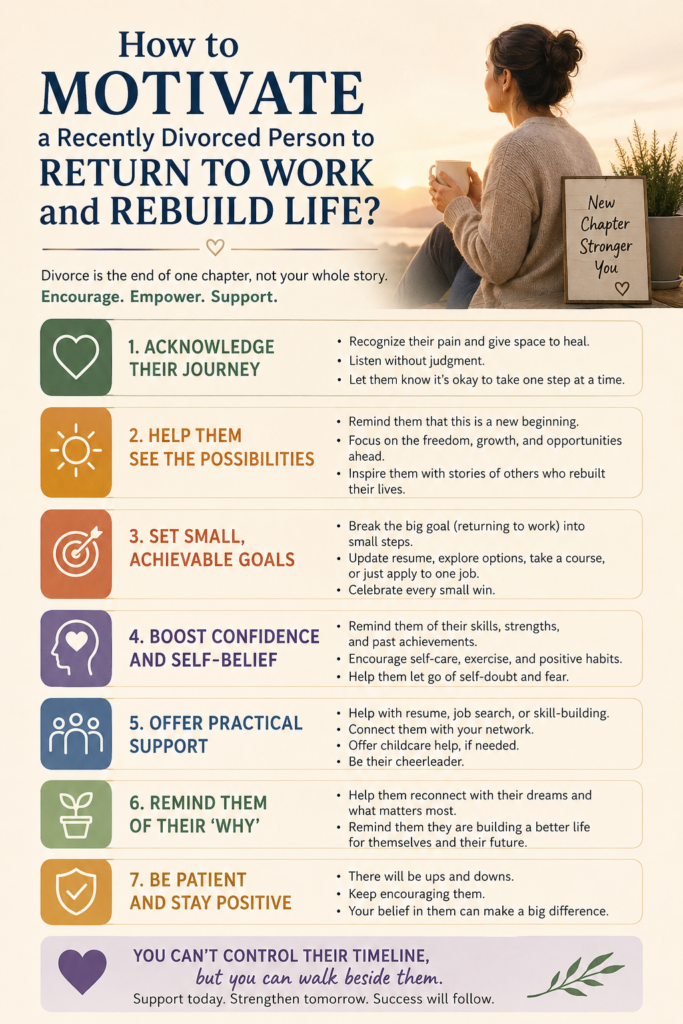
In this article, I will focus on “How to Motivate a Recently Divorced Person to Return to Work and Rebuild Life?” I know that work cannot eliminate the pain of divorce, but it can provide purpose, routine, financial security, and valuable social connections. These benefits often make the recovery journey more manageable and help individuals gradually rebuild their lives with confidence and hope. I will tell you the ways by which you can come out of the pain of divorce, and you will start your work again, and will become productive in your life, and will enjoy every moment of life even after divorce.
Understanding the Emotional Impact of Divorce
Divorce is not just a legal separation; it is often an emotionally painful experience that can bring deep feelings of grief, loss, and exhaustion. Even when a divorce is necessary or mutually agreed upon, individuals may struggle with the end of a relationship, the loss of shared dreams, and the uncertainty of the future.
The emotional pain of divorce can be like mourning the loss of a loved one. People may experience:
- Sadness and loneliness
- Anger and resentment
- Guilt and regret
- Fear about the future
- Anxiety and depression
- A sense of failure or rejection

The stress of divorce can be mentally and physically draining. Emotional exhaustion may lead to:
- Constant fatigue
- Difficulty concentrating
- Sleep disturbances
- Loss of motivation
- Reduced work performance
- Withdrawal from social activities
Managing legal issues, financial concerns, parenting responsibilities, and personal emotions simultaneously can leave a person feeling overwhelmed.
Divorce can have a profound impact on a person’s self-confidence. When a marriage ends, many people begin to question their worth, decisions, attractiveness, and ability to build a happy future. Feelings of rejection, failure, loneliness, and uncertainty can gradually erode self-esteem.

Why does motivation often disappear after a divorce?
Divorce is not just the end of a relationship; it is often the loss of a shared future, daily routines, emotional security, and a sense of identity. Because of these losses, many people experience a significant drop in motivation after a divorce.
Loss of Purpose: Many people build their goals and routines around their marriage and family. After a divorce, they may struggle to find a new sense of direction, causing motivation to decline.

Reduced Self-Confidence: Rejection, conflict, or feelings of failure can damage self-esteem. When confidence drops, people may doubt their abilities and lose the drive to pursue opportunities.
Stress and Uncertainty: Financial concerns, housing changes, co-parenting responsibilities, and legal matters create uncertainty about the future. This ongoing stress can make it difficult to focus on long-term goals.
Loneliness and Isolation: The loss of a partner and changes in social circles can lead to feelings of loneliness. Without emotional support, staying motivated becomes more challenging.
Mental and Physical Fatigue: Divorce often affects sleep, appetite, and overall health. When the body and mind are exhausted, motivation naturally decreases.

Why Returning to Work Matters after Divorce?
Divorce can be one of life’s most emotionally challenging experiences. Feelings of grief, loneliness, anxiety, and uncertainty can make even simple daily tasks seem overwhelming. During this difficult period, returning to work can play a vital role in the healing process.
Work Provides a Sense of Purpose: After a divorce, many people feel as though a major part of their identity has been lost. Work gives you meaningful goals to pursue and responsibilities to fulfill, helping restore a sense of purpose and direction.
It creates a Healthy Routine: Emotional pain often disrupts daily habits. Going to work establishes structure and consistency, which can reduce feelings of chaos and help you regain control over your life.

Financial Stability Reduces Stress: Divorce frequently brings financial changes and uncertainties. Returning to work helps maintain income, meet responsibilities, and build confidence in your ability to support yourself and your future.
Social Interaction Prevents Isolation: Many divorced individuals withdraw from friends and family. The workplace provides opportunities for social connection, conversation, and support, reducing feelings of loneliness.
Work Boosts Self-Confidence: Completing tasks, solving problems, and achieving professional goals remind you of your skills and strengths. These small victories can gradually rebuild confidence that may have been shaken by the divorce.

It Shifts Focus Toward the Future: While healing requires acknowledging your emotions, constantly dwelling on the past can slow recovery. Work encourages forward thinking, personal growth, and planning for new opportunities.
Personal Growth and Independence: Returning to work can help you rediscover your capabilities as an individual. It reinforces resilience, independence, and the belief that you can create a fulfilling life after divorce.
Effective Ways to Motivate a Recently Divorced Person
1. Listen Without Judging: It is very important to first listen carefully to that person before giving your suggestions or advice.
- Allow them to express emotions freely.
- Avoid giving unsolicited advice.
2. Encourage Small Steps: Encourage such a person to start taking an interest in day-to-day life and come out of the tragic situation.
- Focus on getting through one workday at a time.
- Celebrate small achievements.

3. Help Them Rediscover Purpose: You can help such a person rediscover the purpose of his or her life to come back in the mainstream.
- Discuss career goals and personal aspirations.
- Connect work with future opportunities.
4. Remind Them of Their Strengths
- Highlight past successes and accomplishments.
- Reinforce their professional value.
5. Promote Self-Care
- Encourage healthy sleep, exercise, and nutrition.
- Explain how physical health affects motivation.
6. Suggest Professional Support
- Therapy or counselling can help process emotions.
- Seeking help is a sign of strength, not weakness.
Common Mistakes to Avoid
- Forcing them to “move on” too quickly.
- Minimizing their pain.
- Comparing their situation with others.
- Pressuring them to perform at their previous level immediately.
Success Stories: Rebuilding Life Through Work
Share a short example or case study of someone who regained confidence and purpose through their career after divorce.

Conclusion
In this article, I have compiled the need for and importance of motivation and work to help a recently divorced person live a normal life. It is pertinent to mention here that life is full of challenges for all, but with motivation, we can restart our lives full of positivity and success. I would like to conclude my article with the important takeaways given below.
- Recovery from divorce takes time.
- Returning to work is not about forgetting the past but creating a better future.
- With patience, support, and encouragement, a recently divorced person can regain motivation, confidence, and hope.
We offer poetry and lyric writing services for all your needs, personal or professional, in English and Hindi. To avail the service, please contact by email: rajeevkharb_2007@rediffmail.com